Ready to test your judgment with difficult choices and impossible dilemmas? Explore hard Would You Rather questions that challenge your priorities, make you weigh the consequences, and spark interesting debates with friends.
Some choices are harder than they look. Explore tough decisions, moral dilemmas, and brain teasers, then pick the option you could actually live with. Vote on each question and compare your answer with the results.
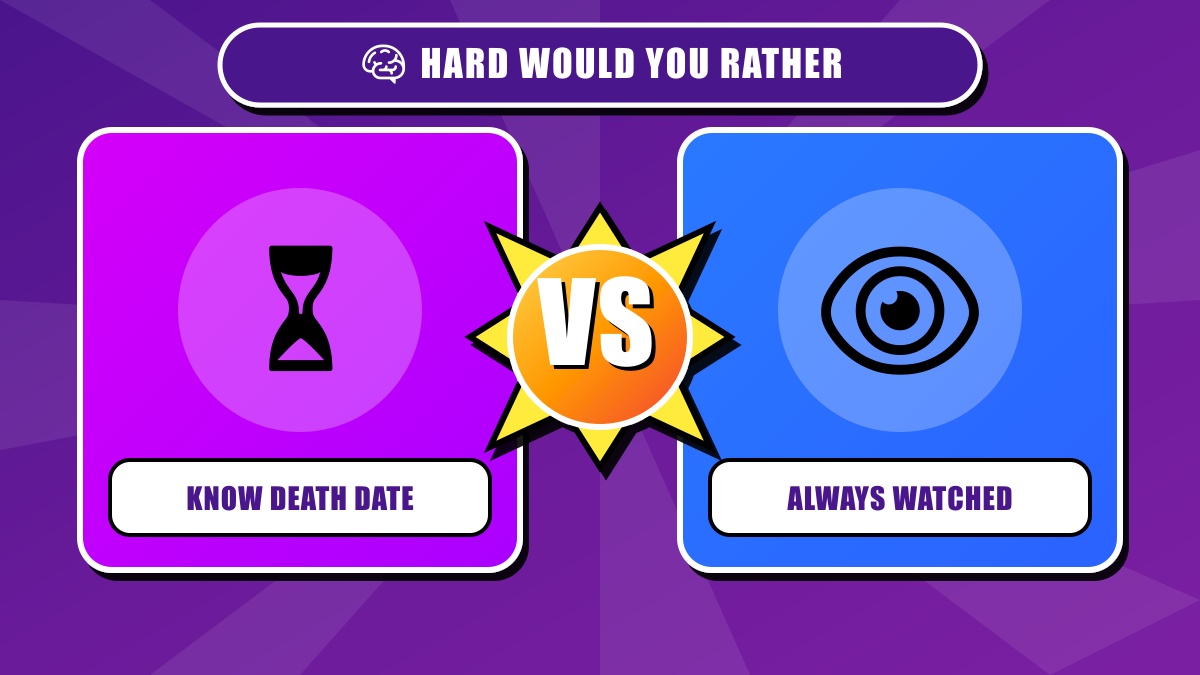
The hardest Would You Rather questions make you choose between two things you genuinely value. Both options might offer something appealing, but each comes with a downside that makes the decision difficult. Instead of immediately knowing which answer to pick, you have to decide what matters more to you.
Imagine choosing between being the smartest person alive but always feeling miserable, or being the happiest person alive without exceptional intelligence. One option offers extraordinary ability, while the other prioritizes happiness. Your answer depends on how you weigh those two things, and someone else might have a completely different perspective.
Some dilemmas are difficult because of their consequences, while others challenge your beliefs about freedom, relationships, honesty, or success. There is no universal right answer. The interesting part is working through the trade-offs and deciding which disadvantage you would rather accept.
An easy question can produce an answer in seconds. A genuinely difficult dilemma makes people explain their reasoning, challenge one another's assumptions, and reconsider what they would do in an unfamiliar situation.
For example, would you rather always know when someone is lying or always get away with lying? One option gives you an advantage when judging other people, while the other changes the consequences of your own dishonesty. People may disagree because they interpret trust, fairness, and personal advantage differently.
These discussions can reveal unexpected differences between friends, even when they usually agree on most things. Someone who values security might make a different choice from someone who prioritizes freedom or new experiences.
You do not need to agree on the final answer for the game to be enjoyable. Asking why someone chose an option often makes the conversation more interesting than simply finding out which answer received the most votes.
Hard dilemmas are more enjoyable when everyone has enough time to consider both options. Rather than rushing through the questions, give each player a moment to think about the possible outcomes and decide which trade-off they would accept.
Follow these simple steps for a more engaging game:
For a bigger challenge, let players defend the option they did not choose. This encourages them to consider another perspective rather than simply repeating their original argument.
You can play during a game night, on a road trip, or in a group chat. If you want to continue with different types of dilemmas, the online Would You Rather game lets you explore more questions and compare your choices through the voting experience.
A question is not automatically difficult just because its options sound extreme. The strongest dilemmas give both choices a meaningful advantage and a disadvantage, leaving players with a genuine reason to hesitate.
Here are a few things that make a question more challenging:
Consider the difference between choosing a superpower with no downside and choosing between two abilities that each come with a serious limitation. The second scenario creates a more meaningful decision because players must think about how they would actually use the ability and what they would sacrifice.
A hard Would You Rather question gives you two choices where neither option is an obvious winner. Both sides should have a meaningful advantage, disadvantage, or consequence that makes you stop and think before choosing.
Take a moment to consider what matters most to you before choosing an option. There is no correct answer, so the interesting part is explaining why you accepted one difficult choice over the other.
The strongest challenging questions make both options tempting, uncomfortable, risky, or equally difficult in different ways. A good question should create a genuine dilemma rather than simply making one choice clearly better.
Yes, they can be especially interesting in groups because people often make completely different choices when faced with the same dilemma. After everyone votes, comparing the reasons behind those choices can lead to some surprising discussions.
Give both options a real trade-off instead of creating one obviously preferable choice. Adding consequences, limitations, or two equally valuable outcomes can turn a simple question into a much harder decision.